Born in 1957 in Najafabad, Isfahan Province, Larijani rose through the ranks of the revolutionary establishment with a combination of intellectual sophistication and political cunning that set him apart from many of his contemporaries. He served as the head of Islamic Republic of Iran Broadcasting (IRIB) from 1994 to 2004, a position of enormous influence in a country where state media functions as a primary instrument of ideological control.
However, it was his appointment as Iran's chief nuclear negotiator in 2005 that elevated Larijani to international prominence. During a period of intense diplomatic pressure from Western powers over Iran's uranium enrichment programme, Larijani served as the face of Tehran's negotiating position. He engaged directly with European Union representatives and, through back channels, with American officials, navigating a landscape of sanctions, threats, and deeply entrenched mutual distrust. His approach was characterised by a mixture of calculated firmness and pragmatic flexibility that earned him grudging respect even among Iran's adversaries.
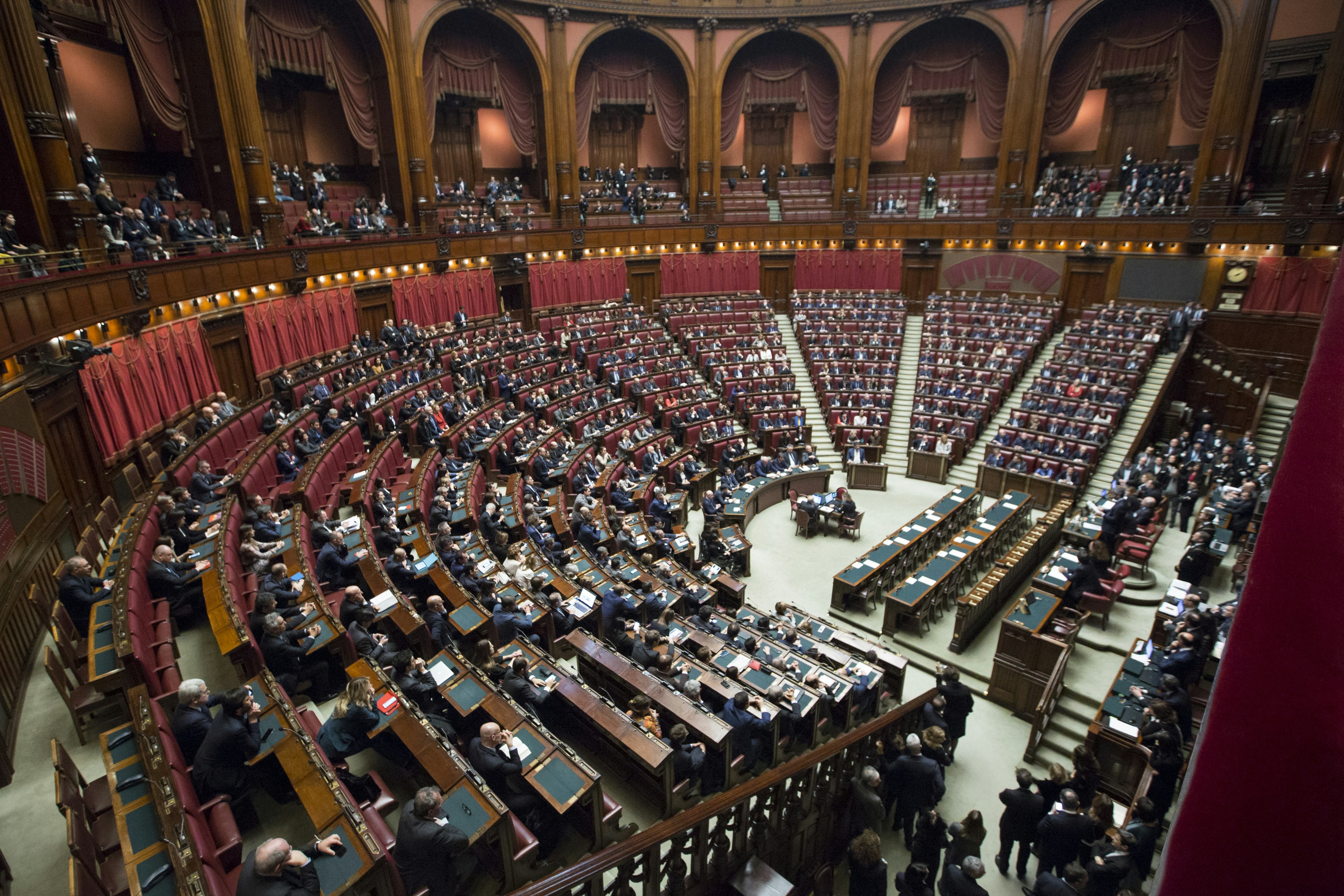
From 2008 to 2020, Larijani served as Speaker of the Iranian Parliament (Majlis), making him one of the three most powerful figures in the country's political system alongside the Supreme Leader and the President. In this role, he oversaw legislative responses to the nuclear deal (JCPOA), managed factional politics between reformists and hardliners, and maintained a careful balance between institutional loyalty and policy independence.
His appointment as secretary of the Supreme National Security Council — a body that coordinates Iran's defence, intelligence, and foreign policy apparatus — placed him at the very centre of Iran's war planning following the outbreak of hostilities on February 28. In this capacity, he was directly involved in coordinating Iran's military response to the initial US-Israeli strikes on Tehran, including the retaliatory attacks on Gulf state assets and the ongoing missile and drone campaigns.
314
Ballistic Missiles Fired at UAE
1,672
Drones Launched at UAE
2nd
Highest-Ranking Iranian Official Killed
Details of the Strike
According to multiple regional and international media sources, the Israeli airstrike that killed Larijani was carried out in the early hours of March 17, 2026, as part of a broader wave of precision strikes targeting Iranian military and political infrastructure. The exact location of the strike has not been officially disclosed by either side, though Iranian state media indicated it took place at a secure facility used by senior National Security Council personnel.
Israeli Defense Minister Israel Katz confirmed the strike in a statement released through official channels, noting that the operation had been planned over a period of days using intelligence gathered from multiple sources. Katz framed the killing as a necessary measure to degrade Iran's capacity to coordinate retaliatory operations against Israel and its allies in the region.
In addition to Larijani, the strike killed his son Morteza Larijani, who had been serving in an advisory capacity within his father's office. Alireza Bayat, the head of Larijani's personal office and a long-serving aide who managed much of the day-to-day coordination between the National Security Council and Iran's military commands, was also among the dead. Several members of Larijani's security detail were killed in the attack as well.
The operation bore the hallmarks of the targeted assassination strategy that Israel has employed throughout the conflict, which began with the killing of Ayatollah Khamenei on February 28 and has since claimed the lives of several senior Iranian military and political figures. Basij commander Soleimani was also reported killed during the same period of operations, further depleting Iran's leadership cadre.
Timeline of Key Leadership Losses
- February 28 (Day 1): Ayatollah Ali Khamenei, Supreme Leader of Iran, killed in initial US-Israeli strikes on Tehran — the event that ignited the Gulf conflict.
- Early-to-Mid March: Basij commander Soleimani killed in Israeli operations during the course of the conflict.
- March 17 (Day 18): Ali Larijani, secretary of the Supreme National Security Council, killed alongside his son, chief of staff, and security guards.
Iran's Response: Vows of Revenge and Retaliatory Strikes
The reaction from Tehran was swift, furious, and unequivocal. The Islamic Revolutionary Guard Corps (IRGC) issued a statement within hours of the confirmation of Larijani's death, vowing what it described as a "rapid strike" and "intense" attacks against Israeli targets in retaliation. The language used by the IRGC was notably more aggressive than the statements issued after previous leadership losses, suggesting that the killing of Larijani — who was seen as a relatively moderate figure within the security establishment — has hardened the resolve of Iran's military commanders.
"The blood of our martyred brother Ali Larijani will not be washed away by the passage of time. The response of the Islamic Republic will be rapid, it will be intense, and it will be felt by every corner of the Zionist entity. We do not seek escalation — but we will not accept the systematic assassination of our leaders without delivering a response that reshapes the calculations of our enemies."
Statement from the Islamic Revolutionary Guard Corps (IRGC), March 17, 2026
Iran also launched retaliatory strikes against American military assets stationed in the Persian Gulf region. While full details of these operations remain unclear amid the fog of war, regional intelligence sources confirmed that Iranian forces targeted US naval and air installations using a combination of ballistic missiles and drone swarms. The strikes represent a significant expansion of Iran's target set, which had previously focused primarily on Israeli and Gulf state assets.
Iran's foreign minister sought to project stability in the aftermath of the killing, stating publicly that Larijani's assassination "will not destabilise the Iranian political system." The statement was clearly designed to counter the perception — actively promoted by Israeli and American officials — that the targeted killing campaign is degrading Iran's ability to function as a coherent state actor. However, the rapid succession of leadership losses has inevitably placed enormous strain on Iran's command-and-control structures, and the question of who will assume Larijani's coordinating role remains unanswered.
The Broader War: From Tehran to the Gulf
The killing of Larijani must be understood within the context of a conflict that has already fundamentally altered the security architecture of the entire Gulf region. The war began on February 28, 2026, when a coordinated campaign of US and Israeli airstrikes hit targets across Tehran and other Iranian cities. The strikes, which killed Ayatollah Khamenei among many others, represented the most significant military action against Iran since the Iran-Iraq War of the 1980s.
Iran's response has been comprehensive and sustained. Unable to match the precision strike capabilities of the US-Israeli coalition, Tehran has pursued a strategy of regional escalation, targeting not only Israel but also the Gulf states that Iran views as complicit in the campaign against it. The United Arab Emirates has borne a particularly heavy burden of this retaliation.
ALERT
According to verified reports, Iran has launched a staggering 314 ballistic missiles and 1,672 attack drones at UAE territory since the conflict began. These strikes have prompted temporary closures of UAE airspace, including a brief shutdown on March 17 — the same day Larijani was killed. The scale of the assault on a country that is not a direct party to the Israel-Iran confrontation underscores the extent to which the conflict has metastasised beyond its original parameters.
Impact on Dubai and the UAE
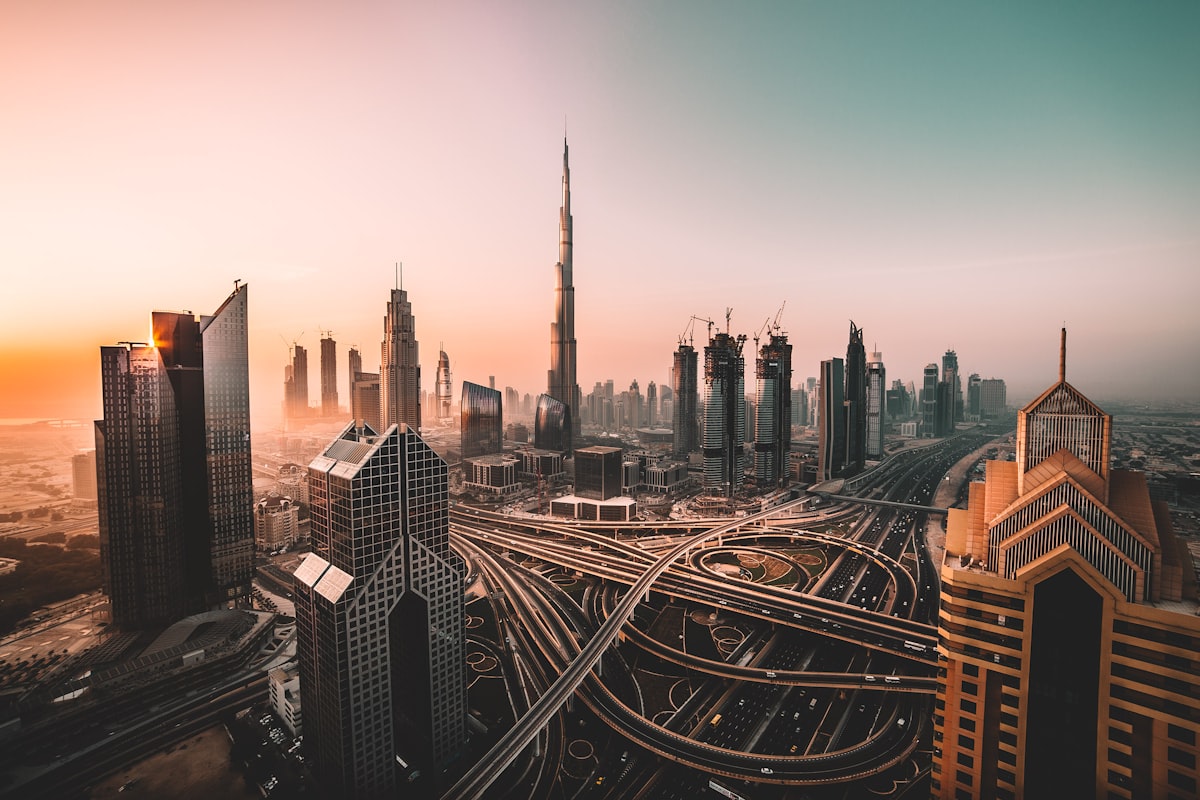
For Dubai — a city whose economic model is built on openness, connectivity, and the perception of stability — the ongoing conflict represents an existential challenge unlike any it has faced in the modern era. The repeated missile and drone attacks, the temporary airspace closures, and the broader atmosphere of regional instability all threaten the foundations of an economy that depends on international trade, tourism, and foreign investment.
The brief closure of UAE airspace on March 17 had immediate consequences for Dubai International Airport, one of the busiest aviation hubs in the world. Airlines were forced to divert or delay flights, disrupting travel and cargo operations at a facility that typically handles hundreds of thousands of passengers per week. While the closure was temporary, each such incident further erodes confidence in the reliability of Dubai as a transit and business destination.
The financial markets in Dubai and Abu Dhabi have experienced significant volatility since the conflict began. Foreign direct investment decisions are being deferred or redirected, and the real estate sector — a bellwether of economic confidence in Dubai — has shown signs of cooling as international buyers reassess the risk profile of Gulf investments. The tourism sector, which accounts for a substantial portion of Dubai's GDP, has been hit by cancellations and a sharp decline in new bookings from key source markets in Europe and Asia.
Beyond the immediate economic impacts, the conflict has forced the UAE to confront difficult questions about its security partnerships and strategic positioning. The country's close relationship with the United States, which has historically served as the cornerstone of its defence posture, is now a source of vulnerability rather than protection, as Iran views the Gulf states' hosting of American military assets as grounds for retaliation.
Humanitarian and Civil Defence Considerations
UAE authorities have activated comprehensive civil defence protocols in response to the ongoing threat. Air raid warning systems have been tested and deployed in major urban centres, and residents have been issued guidance on emergency procedures. While the UAE's missile defence systems — including the THAAD and Patriot batteries supplied by the United States — have intercepted a significant proportion of incoming projectiles, no defence system is impervious, and the sheer volume of Iranian launches means that some have reached their targets.
The psychological toll on residents, both citizens and the large expatriate community that forms the backbone of Dubai's workforce, should not be underestimated. Eighteen days of conflict, punctuated by air raid alerts and airspace closures, have created an atmosphere of sustained anxiety that stands in stark contrast to the sense of security that Dubai has long cultivated as a core part of its brand.
Diplomatic Implications and International Reaction
The killing of Larijani has further complicated already fraught diplomatic efforts to de-escalate the conflict. Several international actors, including the European Union, China, and various UN agencies, have been attempting to establish channels for ceasefire negotiations. The systematic elimination of senior Iranian interlocutors — particularly someone like Larijani, who had extensive experience in international negotiations — makes these efforts significantly more difficult.
"Ali Larijani was one of the few remaining Iranian officials with both the authority and the diplomatic experience to engage meaningfully with Western interlocutors. His death removes a potential bridge between Iran and the international community at precisely the moment when such a bridge is most desperately needed."
Senior European diplomatic source, speaking on condition of anonymity
The domestic political situation in the United States has also been affected by the conflict's trajectory. CNN reported on March 17 that a senior official within the Trump administration resigned over the conduct of the war, though details of the resignation and the specific policy disagreements that prompted it remain unclear. The departure signals growing discomfort within the American government about the direction and consequences of the military campaign, even as the administration publicly maintains its commitment to the operation.
IRGC Retaliation: What Comes Next?
The IRGC's promise of "rapid" and "intense" retaliation raises urgent questions about the next phase of the conflict. Iran's military doctrine emphasises strategic patience combined with disproportionate response, and the killing of a figure as senior as Larijani is likely to trigger a significant escalatory action.
Possible forms of retaliation include an expanded missile barrage against Israeli territory, attacks on US military installations throughout the Gulf region, activation of proxy forces in Iraq, Syria, and Lebanon, and further strikes on Gulf state infrastructure. The IRGC also possesses significant cyber warfare capabilities, and a major cyber attack against Israeli or Gulf state critical infrastructure cannot be ruled out.
The targeting of US assets in the Gulf, which Iran has already begun, represents a particularly dangerous escalation. Any significant damage to American military personnel or equipment would likely trigger a further US military response, creating a cycle of escalation that neither side may be able to control.
Key Factors Shaping the Conflict's Trajectory
- Leadership vacuum in Iran: The successive killing of Khamenei, Larijani, Soleimani, and other senior figures has created unprecedented instability in Iran's decision-making structures.
- Iranian retaliatory capacity: Despite the leadership losses, Iran retains a massive arsenal of ballistic missiles, drones, and proxy networks capable of sustaining a prolonged campaign.
- Gulf state vulnerability: The UAE, Saudi Arabia, and other Gulf nations face continued exposure to Iranian strikes, with potential consequences for global energy markets and trade flows.
- Diplomatic paralysis: The killing of experienced negotiators like Larijani makes ceasefire efforts more difficult and reduces the pool of credible interlocutors on the Iranian side.
- US domestic politics: Growing dissent within the Trump administration, as evidenced by the reported resignation, could influence the pace and scope of American military operations.
What This Means for the War's Trajectory
Eighteen days into this conflict, the killing of Ali Larijani marks a point of inflection rather than a step toward resolution. The Israeli strategy of decapitating Iran's leadership has achieved tactical successes — the removal of key decision-makers is undeniably disruptive to Iran's war effort. But the strategic logic of this approach is far less clear. Each assassination hardens Iranian resolve, reduces the likelihood of negotiated outcomes, and pushes more extreme voices to the fore within what remains of Iran's leadership structure.
The conflict has already exceeded the worst-case scenarios envisioned by most regional analysts at its outset. The scale of Iranian missile and drone attacks on Gulf states, the targeting of US assets, and the broader destabilisation of a region that accounts for a significant share of global energy production all point toward a protracted and expanding confrontation. The killing of Larijani removes one of the figures who might, under different circumstances, have been instrumental in finding an off-ramp.
For Dubai and the broader UAE, the implications are stark. The emirate's leadership faces the challenge of maintaining economic functionality and public confidence while under sustained military threat — a situation for which decades of peacetime prosperity have not prepared the nation. The coming days and weeks will test the resilience of Gulf state institutions, the effectiveness of their defence systems, and the strength of their international partnerships in ways that will shape the region for a generation.
As the Gulf conflict enters its third week with no ceasefire in sight and the cycle of strikes and counter-strikes intensifying, the death of Ali Larijani stands as a grim milestone in a war that continues to defy containment and challenge the assumptions of all parties involved.